
journal·6 min read
Haeundae After Dark — The Night Sea, Signiel Busan, and the Art of Slowing Down
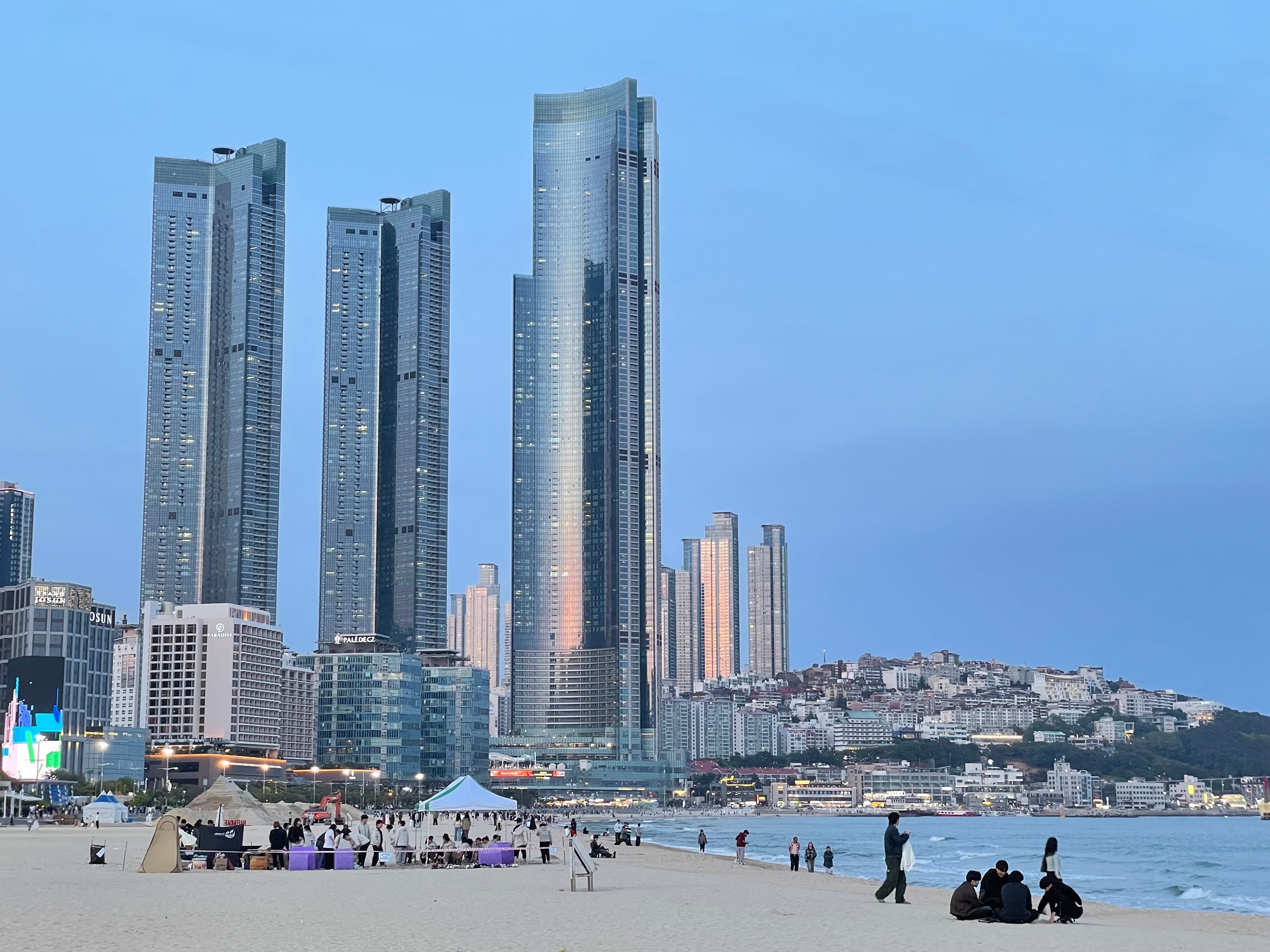
There is a specific hour in Haeundae — somewhere between 8 p.m. and 9 p.m. — when the crowd thins and the light changes. The seafront promenade empties of its afternoon energy; the cotton-candy vendors pack up; the family groups retreat. What remains is the sea itself, black and restless, edged by the slow amber sweep of streetlamps and the cold white signatures of high-rises along Marine City. It is, by any measure, one of the most atmospheric stretches of urban coastline in Northeast Asia.
For long-stay visitors — those who have already ticked the daytime boxes of a trip to Busan — Haeundae at night is the more rewarding chapter. This guide is written for that reader: someone with time, a preference for unhurried observation, and an appetite for the city's more considered pleasures.
The Geography of the Night Waterfront
Haeundae Beach stretches roughly 1.5 kilometres from the Mipo end in the east to the Dongbaek Island peninsula in the west. Most visitors anchor themselves near the central lifeguard stations, which is precisely why the margins are worth exploring after dark.
The Mipo end — accessible via a short walk past the Moontan Road entrance — is quieter, favoured by locals jogging the coastal path. On clear evenings, the lights of the Gwangan Bridge are visible to the south-west, a slow geometric arc over the water. The bridge illuminates in full colour sequence after 8 p.m. (subject to seasonal programming — confirm via the Busan Metropolitan City official channel before your visit).
Dongbaek Island, at the opposite end, closes its inner paths at dusk, but the APEC House-side perimeter walk remains accessible and offers the clearest unobstructed view of the Marine City skyline. Walking the full beach perimeter, east to west, takes approximately 35–45 minutes at a relaxed pace.
Signiel Busan — Height as a Lens
Signiel Busan occupies floors 20 through 38 of the LCT The Sharp Tower in Marine City — a few hundred metres from the beach, but elevated enough to reframe the entire coastline. At night, from its upper floors, Haeundae Beach appears as a pale crescent against the sea, with the city grid spreading inland and the harbour lights of Busan Port glowing distantly to the south.
The property is operated by Lotte Hotels & Resorts under the Signiel marque — the same brand as Signiel Seoul in the Lotte World Tower. Its rooms face either the sea or Marine City's dense vertical landscape, and the difference between the two exposures is meaningful enough to specify when booking.
For those not staying overnight, the Sky Lounge — located on one of the upper floors and operated as a bar — offers non-resident access. Reservations are strongly recommended, particularly on weekends. Pricing and operating hours are subject to change; confirm directly via the Lotte Hotels official site or Naver Place before visiting. Last verified 2026-04-25.
Practical Access
By metro: Busan Metro Line 2 to Haeundae Station (해운대역), Exit 5 or 7. From the station to Marine City by taxi is approximately 5–7 minutes (variable depending on traffic).
By taxi: From Haeundae Beach central to Signiel Busan's LCT tower entrance, approximately 3–5 minutes by car. Confirm drop-off point: the Signiel entrance is separate from the LCT residential tower lobby.
Address: 윈클시티로 294, 해운대구, 부산 (Wincle City-ro 294, Haeundae-gu, Busan) — subject to correction. Verify on Naver Place or the Lotte Hotels official website.
The Night Walk: A Suggested Sequence
The most satisfying approach to a Haeundae evening is to begin on foot and ascend by end. Start at the beach promenade around 7:30 p.m., when the last of the afternoon light is draining from the horizon. Walk west toward Dongbaek, then loop back east along the waterfront. The sand at this hour is cool and firm; the sea breaks quietly without the afternoon's surf energy.
By 9 p.m., head north into Marine City. The neighbourhood is worth 20 minutes on its own: the tower bases are lit from below, the retail podiums have evening visitors, and the scale of the architecture is easier to appreciate once the beach crowd has dispersed. From here, a short taxi ride or a 12–15 minute walk brings you to Signiel Busan.
The sequence — sea level first, then elevation — produces a particular kind of perceptual shift. The city's neon coherence, which is somewhat chaotic at street level, resolves into something legible and almost serene from above. It is one of the better-structured urban evenings available in Korea.
Weekend Energy: Buskers, Drone Shows, and the Sand Festival
Friday and Saturday nights are a different Haeundae. The promenade between the central beach and Dongbaekseom can fill with thousands of walkers between 8 p.m. and 11 p.m., and the soundtrack shifts from waves alone to street buskers — guitarists, K-pop covers, occasional traditional pansori — clustered around the central pavilion and along Marine City's lower walkways. Pace yourself: weekend evenings are atmospheric but not contemplative.
Several weekends a month, weather permitting, Busan also runs a coastal drone show over the bay — synchronised LED-equipped drones drawing imagery above the water. Schedules and the exact viewing zone shift; the Busan Tourism Organization (visitbusan.net) and the Haeundae-gu official channel post each event one to two weeks in advance.
For 2026, the Haeundae Sand Festival is scheduled for 15–18 May 2026 (announced; verify the dates and location on the festival's official notice closer to the dates, as start and end times have shifted in past years). Several monumental sand sculptures by invited artists go up along the central beach, alongside open-air exhibitions, music programs and night lighting. The festival is free; for a long-stay visitor it is the single richest weekend of the year on the Haeundae waterfront.
A practical note: parking around Haeundae beaches is severely strained on festival weekends. Use Busan Metro Line 2 (Haeundae or Jung-dong stations) and walk; ride-hail surge pricing peaks between 22:30 and 24:00 as the crowd disperses.
Food and Drink Along the Route
Haeundae's restaurant ecosystem is dense, and the quality range is wide. The following notes are directional rather than specific endorsements — menus, hours, and operators change frequently.
Seafood, Close to the Source
The Haeundae Traditional Market (해운대전통시장), a short walk inland from the beach, has evening stalls serving grilled seafood and pajeon into the late hours. Prices are variable; expect to negotiate or check posted boards. Last verified 2026-04-25 — confirm hours via Naver Place on the day of your visit, as market hours can shift seasonally.
Coffee and the View
Several multi-storey cafés along Haeundae Beach Road (해운대해변로) offer sea-facing windows on upper floors. Many run until midnight, though hours vary by establishment and season. Subject to change — verify via Naver Place before visiting.
For Long-Stay Visitors: Making Haeundae a Regular Rhythm
The instinct for first-time visitors is to consume Haeundae in a single compressed day — arrive, photograph, eat, leave. Long-stay travellers have the option of a different relationship with the place: the beach in early morning, before the swimmers arrive; the market at noon; the promenade at dusk; a late return for the lit skyline.
Busan's KTX connection to Seoul (approximately 2 hours 15 minutes from Busan Station; approximately 2 hours 30–40 minutes from Busan's KTX Gwangalli area, depending on service — verify via Korail official for current schedules) makes it realistic to use Haeundae as a two- to three-night extension of a Seoul-based stay, rather than a day trip. The city repays that investment.
Walking the promenade at 10 a.m. on a mid-week morning, we counted fewer than a dozen people on the full length of the beach. By 11 p.m., the same stretch had perhaps thirty — couples, solo walkers, a few runners. The city at those margins is notably quieter than its reputation suggests, and notably more considered.
Practical Notes
Weather: Haeundae faces the open sea. Evening temperatures, even in summer, drop 3–5°C from daytime highs. A light layer is advisable year-round for night walks.
High season (July–August): The beach operates under full summer management — lifeguards, designated swimming zones, weekend crowds. Night-time is significantly busier during this period. Adjust your visit window accordingly.
Transport home: Late-night taxi availability is good in the Haeundae-Marine City corridor, and the Kakao T app functions reliably in Busan. Busan Metro Line 2 runs until approximately midnight (last train times subject to change — confirm via the Busan Metro official site).
Signiel Busan check-in: For hotel guests, standard check-in is 3 p.m. (subject to change). Early arrival luggage storage is typically available — confirm directly with the hotel. Rates are variable; book via the Lotte Hotels official site for the most accurate pricing.
All operating hours, prices, and transport schedules referenced in this article are subject to change. Last verified 2026-04-25 — confirm via Naver Place, official venue channels, or the Korail/Busan Metro official sites before your visit.
Written by
K-Lifestyle
The K-Lifestyle editorial team is a distributed group of Korea-based editors covering residences, fashion, and restaurants for global long-stay visitors. Every piece is researched with primary sources — landlord interviews, on-site venue visits, and official agency data — and dated on publication and every substantive revision.
- First published
- Last updated