
Notes11 min read
Haeundae Sand Festival 2026: Dates, Programs and Getting There
The 2026 Haeundae Sand Festival ran from May 15 to 18 in Busan, and the sand sculptures stayed until June 14. Dates, programs, getting there from Seoul and timing tips, kept for the next festival.
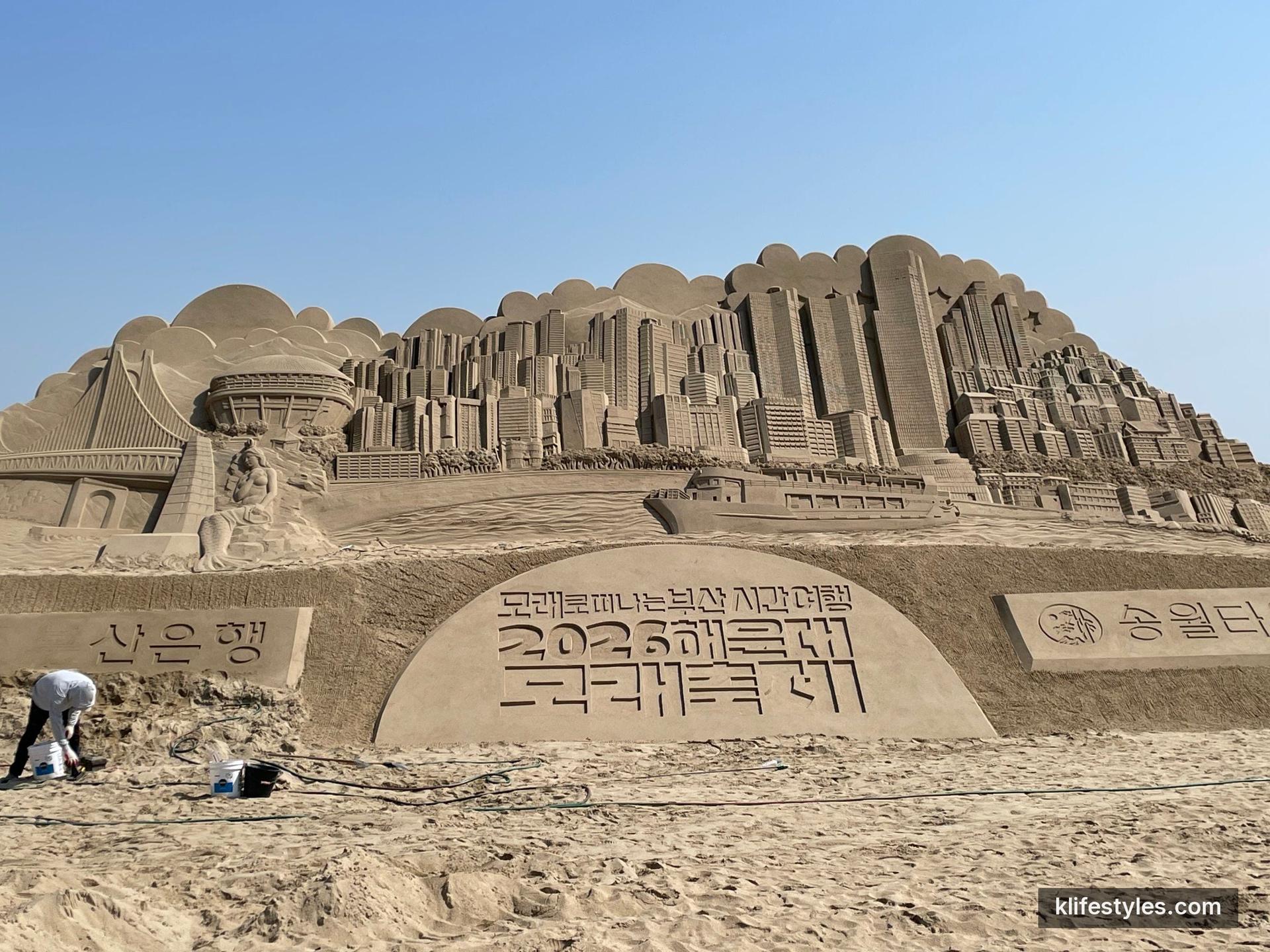
Note: The 2026 Haeundae Sand Festival ended on May 18, and the sand sculpture display ended on June 14. The guide below was written before the festival and is kept as a reference for next year.
Do you have plans to go to Busan in May? Then you're really in luck. Every year in mid-May, the sands of Haeundae Beach turn into a huge open-air art museum. The 2026 Haeundae Sand Festival is the largest sand sculpture festival in the country, held over four days from Friday, May 15 to Monday, May 18. This is its 21st year, and it has also been designated a preliminary cultural tourism festival for 2026 and 2027 by the Ministry of Culture, Sports and Tourism. It's an event I truly recommend both to foreigners staying long term in Korea and to anyone planning a May trip to Busan. In this article I'll cover the 2026 schedule and main programs, how to get there from Seoul, where to stay and what to see nearby, and the best times of day to enjoy it.
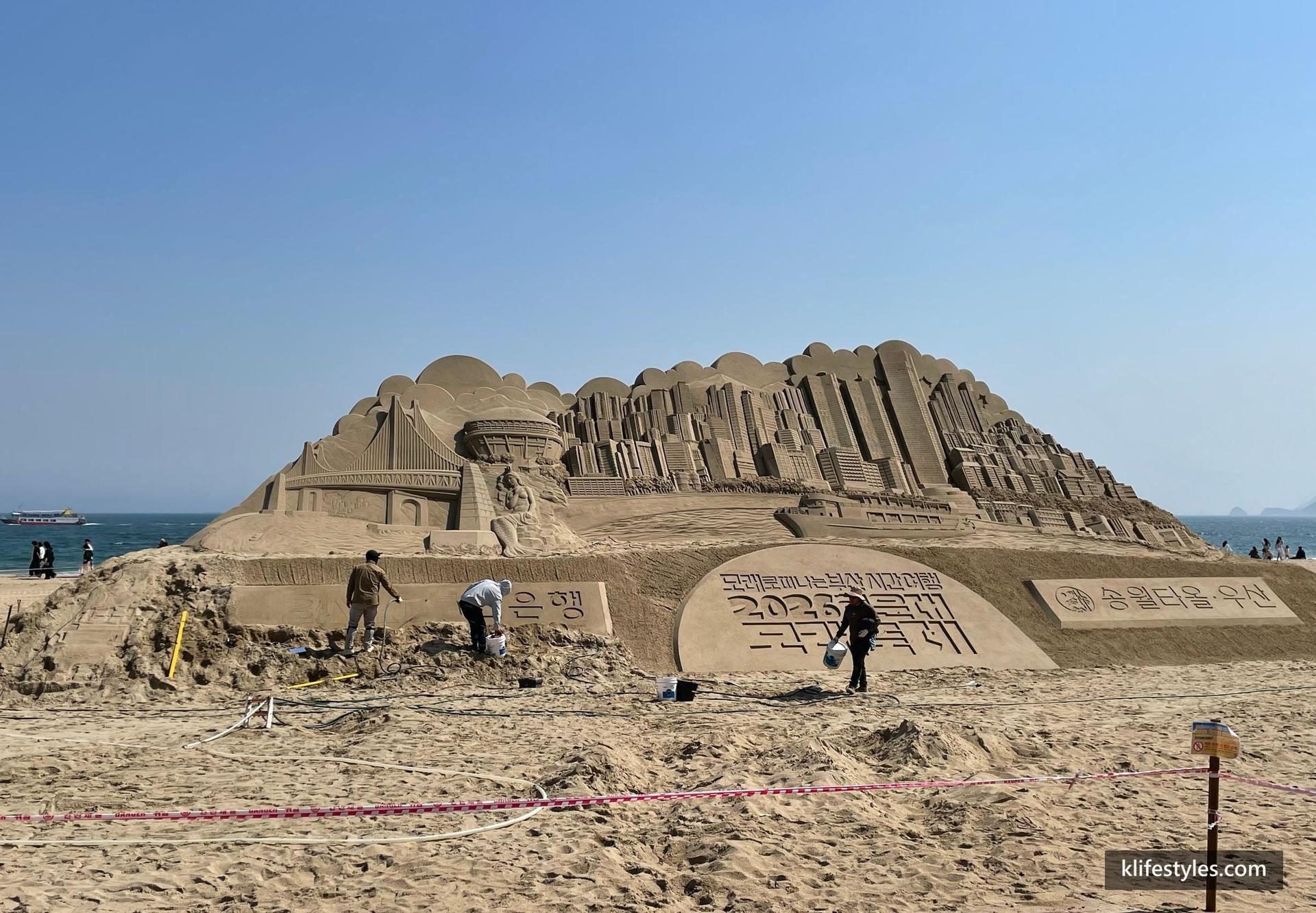
Haeundae Sand Festival 2026: A Busan Time Trip in Its 21st Year
The Haeundae Sand Festival is an outdoor sculpture festival held every May on the sands of Haeundae Beach in Busan. It began in 2005 to commemorate the APEC summit and has grown steadily since, and it's now by far the largest event of its kind in Korea. Along about 1.5 kilometers of beach, sand sculptors from Korea and abroad complete large works over several days.
This year's theme is "A Busan Time Trip in Sand". The concept is to capture the history, charm, and landmarks of Busan in 17 works. From historical footprints such as the Joseon Tongsinsa missions, the wartime provisional capital, and Busan Port, to the lively present of the Busan International Film Festival, baseball cheering culture, surfing, and hot springs, and on to future visions such as the new airport and the opera house, it's all expressed in sculpture in the round and in relief. If you've been to Busan even once, it's fun to spot familiar scenes in each work, and if it's your first visit, you can experience the whole of Busan in compressed form on the sand.
The participating artists are 11 world-class sand sculptors, including Korea's leading artists Choi Ji-hoon, Ji Dae-young, and Kim Gil-man, along with sculptors from Canada, China, France, Taiwan, and elsewhere. Individual works are often more than 3 meters tall, and this year in particular a 7-meter-high sand observatory has been added, so you can look down on the sea from atop a sand work carved with Busan landmarks. The main sculpture has also moved away from the usual pyramid shape and was made as a panorama that takes in the whole view of Haeundae.
Admission to the outdoor exhibition area is free. Some experience booths and programs such as sandboarding may charge a small fee. And the best news: even after the festival ends on May 18, the sand sculptures remain on display for about a month, until June 14. If the crowded festival period feels like too much, come in late May or early June and you can enjoy the works at a far more relaxed pace. Last verified: 2026-05-04.
Main Programs of the Haeundae Sand Festival and the Media Facade After Dark
The program over the four days of the festival is really varied. Rumble Fish opens the celebration at 7:30 p.m. on May 15 on a special stage at the beach. On the 16th, a K-pop dance competition and hip-hop and band performances follow, and over the weekend Gunam-ro Plaza hosts a sand-themed trick art zone along with audience-participation beatbox and loop station shows.
The hands-on programs are what I most want to recommend to foreign visitors. "Challenge! I'm a Sand Sculptor Too" is a program where you make a sand work while learning tips directly from the experts. It runs three times a day from May 15 to 17, with up to 50 teams per session. It's a truly rare experience in Korea, so if you go with foreign friends, the memory will last a lifetime. "Fly, Sandboard" is a popular program where you sled down a sand hill, and there are family activities too, such as water gun battles and a treasure hunt in the sand.
What I really want to stress here is the sand festival at night. The sculptures are good by day, but the truly impressive part comes after sunset. Every day of the festival, from 7:30 p.m. to 11 p.m., the main work becomes a screen for "Haeundae's 100-Year Journey," shown as a media facade. Footage of how Haeundae has changed moves from morning to night, from nature to city, and from black and white to color as it plays across the sand sculpture. And with laser mapping, introduced for the first time this year, the sand observatory presents a night view of Busan Tower, Yeongdo Bridge, and Gwangan Bridge glowing in many colors. Chances to see outdoor media art on this scale for free are truly rare in Korea.
I actually went to last year's sand festival at night, and the moment when the sand sculptures I'd seen by day turned into completely different works through video and light was really impressive. I truly recommend going once during the day to see the details, and going again after sunset to see the media facade. If you have time, going twice on the same day is fine too. There's no admission fee, so there's no pressure.
Getting to the Haeundae Sand Festival from Seoul, from KTX to Subway
The most efficient way to get from Seoul to Busan is the KTX (from Seoul Station) or the SRT (from Suseo Station). The trip takes roughly 2 hours 15 minutes to 2 hours 40 minutes, depending on the train type and stops. Major trains sell out quickly on festival weekends, so book ahead on the official Korail site (letskorail.com) or the SRT app. If you can, I recommend booking a month in advance.
From Busan Station or Seomyeon to Haeundae, Busan Metro Line 2 (the green line) is the most convenient. Leave Haeundae Station by Exit 3 or 5 and walk toward the sea (south) for about 10 minutes to reach the beach. It takes about 40 to 50 minutes from Busan Station to Haeundae Station. Check the exact travel time before you leave on Naver Map or the official Busan Metro site (humetro.busan.kr).
Foreign visitors arriving at Gimhae International Airport (PUS) can take the Busan-Gimhae Light Rail and transfer to subway Line 2 at Sasang Station to reach Haeundae without a taxi. It takes about 60 to 75 minutes in total from the airport to Haeundae Station. Calling a taxi with Kakao T is also easy from the arrivals level on the first floor of the airport.
During the festival, the Haeundae area gets very crowded from mid-morning. To enjoy the works and take photos at a relaxed pace, I strongly recommend arriving before 9 a.m. If you arrive around 8:30, you'll find freshly finished sand sculptures on a nearly empty beach. With luck you may even see the artists doing their finishing touches. It's most crowded between 2 and 5 p.m., and the mood settles again right after sunset. So the best times for photos are early morning and just after sunset.
Staying in Haeundae and Exploring Nearby: Planning a Two-Day Course
Haeundae has a really wide range of places to stay, from the five-star hotels along the beach and around Marine City (Signiel Busan, Park Hyatt, Paradise Hotel) to serviced apartments within a 10-minute walk of the beach. If you're a long-term foreign resident used to Seoul's conveniences, you'll find that with its access to cafés, coworking spaces, and large supermarkets, Haeundae is less a simple resort than a neighborhood you can actually live in.
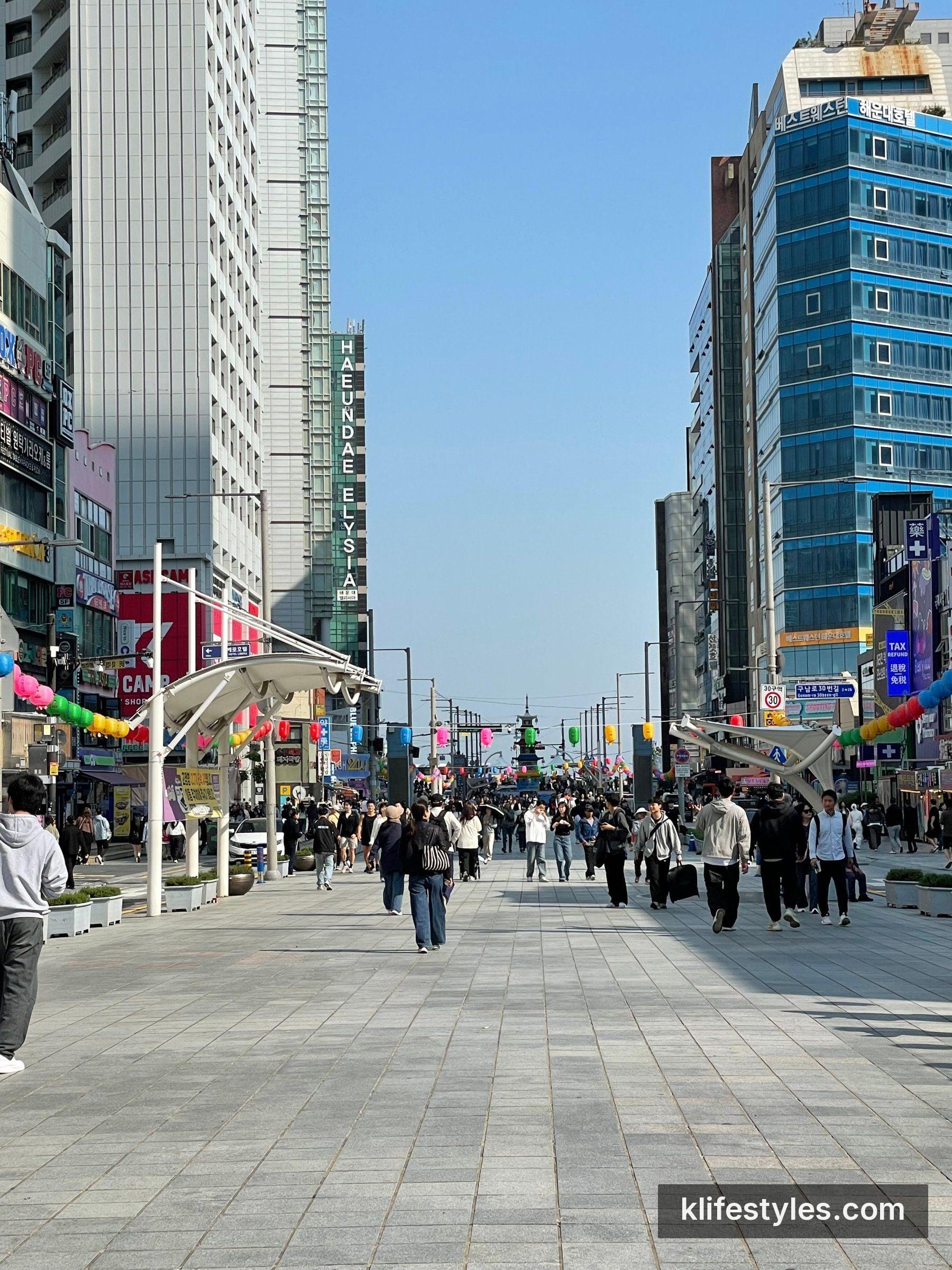
On the festival weekend, hotel rates rise 30 to 60% above normal. The dates of May 15 to 18 are fixed, so it's best to book as early as you can. Rooms at good prices go quickly right after the schedule is announced.
How to use your time outside the festival is worth covering too. At the western end of the beach, the Dongbaek Island trail (about a 40-minute course) leads to the Nurimaru APEC House, so you can take in Busan's nature and history together. A 20-minute walk from Haeundae Station, Dalmaji-gil is a hillside road lined with galleries and cafés. Head here if you want a quiet walk in contrast to the lively beach.
Next to BEXCO, the Busan Museum of Art (art.busan.go.kr) reopened in September 2026 after about two years of renovation (checked 2026-10-04). It's right in front of BEXCO Station (Busan Museum of Art), two stops from Haeundae Station on subway Line 2, and you should check admission and opening hours on the official website before you visit. Pairing the outdoor art of the sand festival with the indoor art of the museum on the same day makes a really good course.
For meals, it's efficient to combine the restaurants along the beach promenade with Haeundae Traditional Market, a 5-minute walk from the beach. At the market you can enjoy raw fish in small portions, and toward Marine City there's a cluster of high-quality seafood restaurants. Prices and menus change a lot, so check Naver Place on the day of your visit.
A recommended two-day or three-day course could look like this. Arrive the evening before the opening → first visit to the sand festival before 9 a.m. the next day → free time in the afternoon (Dalmaji-gil or Dongbaek Island) → watch the media facade in the evening → Haeundae Traditional Market or the Busan Museum of Art the next morning → leave by KTX in the afternoon. It's a far more relaxed experience than a day trip from Seoul.
Why I Recommend the Haeundae Sand Festival 2026, and My Honest Review
The biggest reason I truly recommend the Haeundae Sand Festival is that it's a world-class outdoor art experience you can enjoy for free. Chances to see an international art event of this scale in Korea without an admission fee are really rare. And because of the nature of sand, the works are destined to disappear soon after they're completed, which makes them feel all the more special as works that exist only in that moment. It's art that remains only in photos and memory.
It's also good to go with foreign friends. The content is enjoyed visually, with no language barrier, so you can appreciate it fully even if English guidance is limited, and the hands-on programs make even better memories. For foreigners staying long term in Korea, it's a really good occasion to visit Busan as a cultural destination, not just for a beach trip.
Starting with the upsides: it's free, it's outdoors, it's world class, and you can see the works for a month after the four-day festival. To be honest about the downsides, the four festival days are really crowded. It's a beach, so there's little shade, and the Busan sun in May is fairly strong. A hat, sunglasses, sunscreen, and plenty of water are essential. You'll be walking on sand, so wear sneakers or comfortable shoes. I really don't recommend heels.
If you're planning a trip to Korea in May, be sure to put the sand festival into a two-day Busan course. The sand sculptures stay until early June, so even if the dates don't work for you, going in late May lets you enjoy them in much more peace. Meeting the city of Busan in compressed form on the sand will be a really good chance to show foreign friends another side of Korea.
Have you planned a trip to Busan in May? If you've been to the sand festival, tell me which work impressed you most. If it's your first time, I'm curious which time of day you'll choose. The quiet beach at dawn and the media facade after sunset: I strongly recommend both.
The festival schedule, programs, hotel rates, and transport information in this guide are subject to change. For accurate festival information, check the official Haeundae-gu site (haeundae.go.kr/tour), Visit Busan (visitbusan.net), and Visit Korea (visitkorea.or.kr). For KTX timetables, see the official Korail site (letskorail.com), and for Busan Metro information, see the official Busan Transportation Corporation site (humetro.busan.kr). Haeundae-gu Office Culture and Tourism Division: 051-749-4064. Last verified: 2026-05-04.
Written by
Sua (Kim Sua)
Living in Busan. Writing Korea for the friends who want to stay.
I'm one of the people who run klifestyles.com. I'm a thirty-something based in Busan, writing about Korean fashion, food, and housing for the foreign friends who actually want to live here. I mostly write about places I've been to myself, with notes on which prices and hours are likely to drift.
More about Sua →- First published
- Last updated

More from the blog
Notes11 min read
Making Korean Friends: KakaoTalk, Naver and Social Media
A worry every foreigner on a long stay in Korea has at some point: "How do I make Korean friends?" This guide covers the social platforms Koreans actually use, from KakaoTalk and Naver Cafe to Instagram and YouTube, and how to find your way into their communities.
Read
Notes11 min read
A Complete Guide to Seongsu Yeonmujang-gil: Walking Seoul's Densest Street
Calling Seongsu's Yeonmujang-gil "the Brooklyn of Seoul" no longer does it justice. Korea's design industry, specialty coffee, and traces of a 1960s factory district all sit within a 25-minute walk. This guide covers the way from Seongsu Station, the best times to visit, studios and concept stores, and café culture.
Read
Notes10 min read
Haeundae at Night: A Slow Seaside Walk and Signiel Busan
In the evening, once the tourists have gone, Haeundae shows a completely different face. From a night walk by the sea to the night view from Signiel Busan, here is how to really savor Haeundae.
Read